

Game Intelligence Applied: Analyzing Midfielders' Off-ball Positioning
In the first of a two-part analysis, see how SkillCorner's Passing Options differentiate midfielders by their preferred areas of action: from deep-dropping builders to diagonal receivers and channel-runners.
Common event data captures only a small share of a football match: the moments a player is on the ball. Off-ball positioning can reveal how a player relates to the game around them: where they choose to receive, and whether they make themselves available.
The challenge, so far, has been recording it.
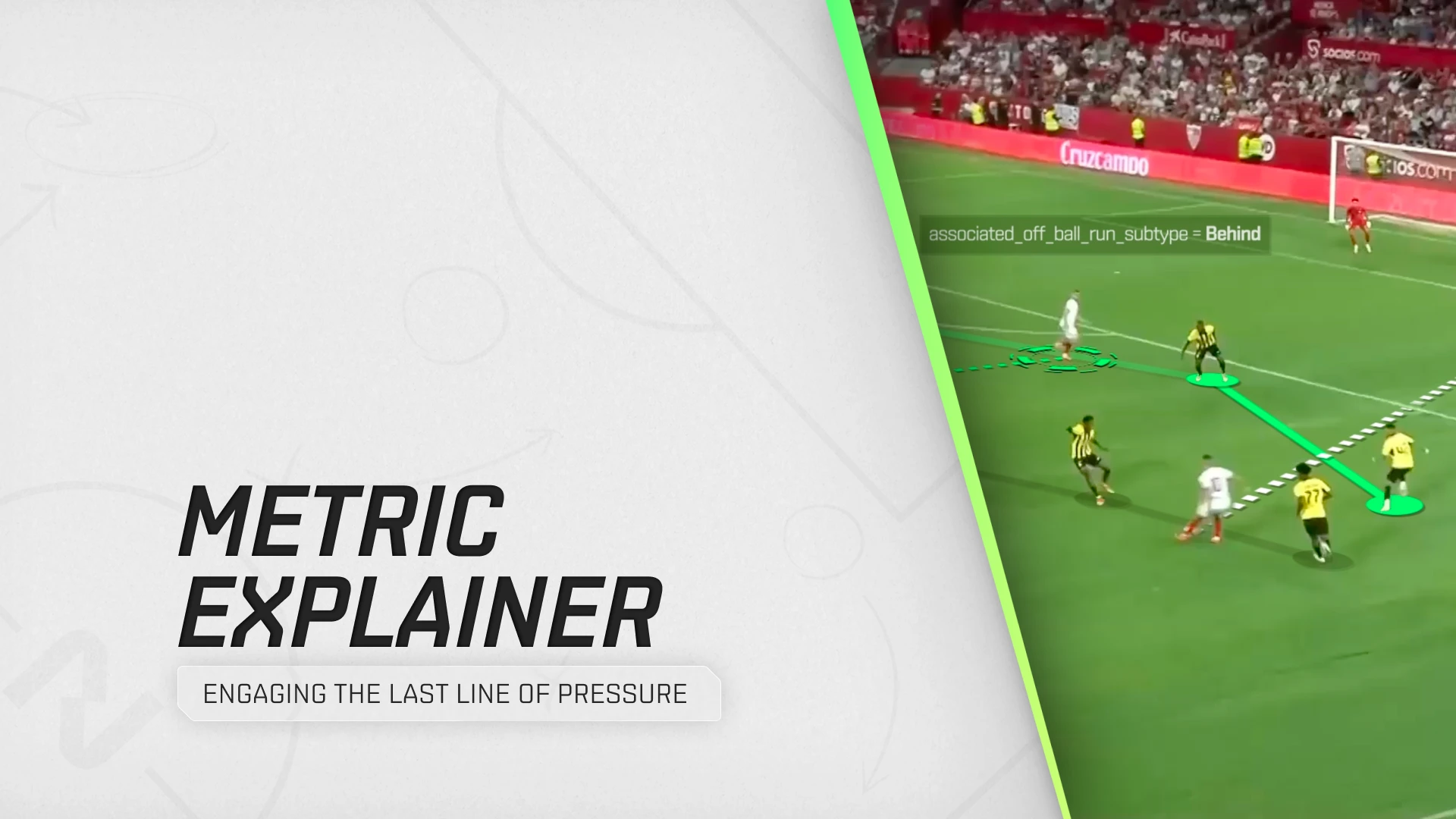
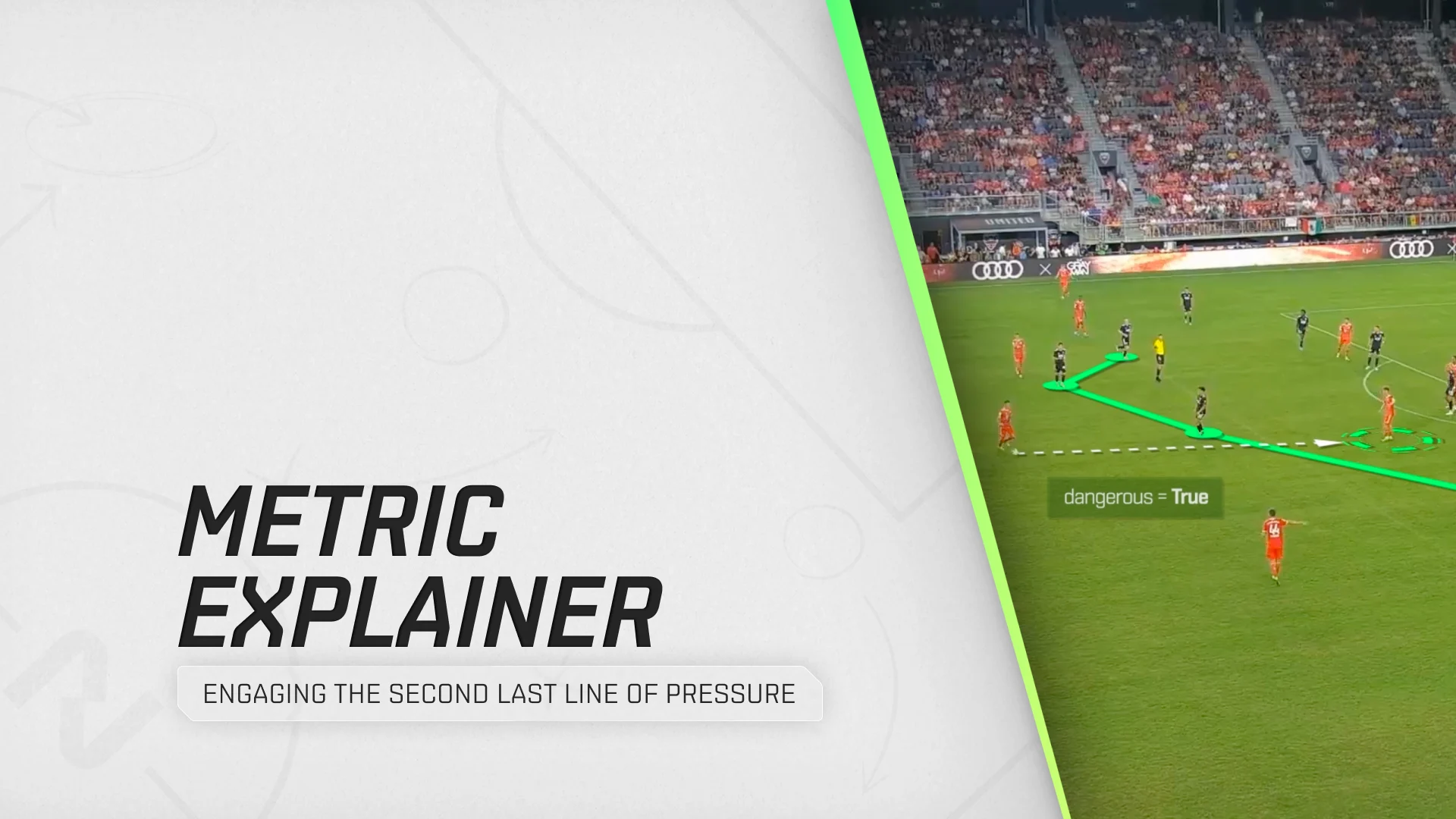
SkillCorner's Passing Options measure exactly this. Our Aggregated Metrics capture the relationship between the opposition's pressure and a player's preferred spaces to show up, whether or not they receive the ball, as covered in our first Passing Options Metric Explainer.
At raw event level, Passing Options sit within SkillCorner's Dynamic Events where we combine XY Tracking and our event data to better define every action and the context around it - alongside complementary types such as Off-Ball Runs that add further detail to a player's movement.
In this GI Applied blog, we will differentiate the midfield position group by their preferred spaces of action and the function each player serves on the pitch. Thanks to the flexibility of Dynamic Events, every situation can be adjusted to fit the demands of each particular game model.
Progression, Diagonality And Running The Channels
Every player serves one or more specific functions within a collective model. Using Passing Options, we set out to answer three performance questions that separate one midfielder from another – questions that hold true across different approaches, whether a team is more positional, relational, or direct.
Which Midfielders Show Up Outside The Defensive Block, As The First "Builders"?
It is increasingly common to see midfielders drop between the centre-backs, or onto the defensive line more generally, to aid the first progression against a Medium Block or to trigger rotations in possession.
By comparing how often a midfielder shows up to receive overall — their total options — against how often they do so outside the opposition block, we begin to isolate the so-called "first builders": those who favour deep positions to lead the team's creative effort. The decision to focus on the Create Phase when facing a Mid Block comes from the logic that this is where players have the most freedom to choose where to position themselves, whereas in Build Up and Finish they are constrained by higher pressure or more condensed space.
In the top-right quadrant below, we find the players constantly making themselves available to receive, with a strong preference for dropping deep against Medium Blocks. Notable players in this quadrant include Vitinha, Pavlović, Anderson, and Rodri.
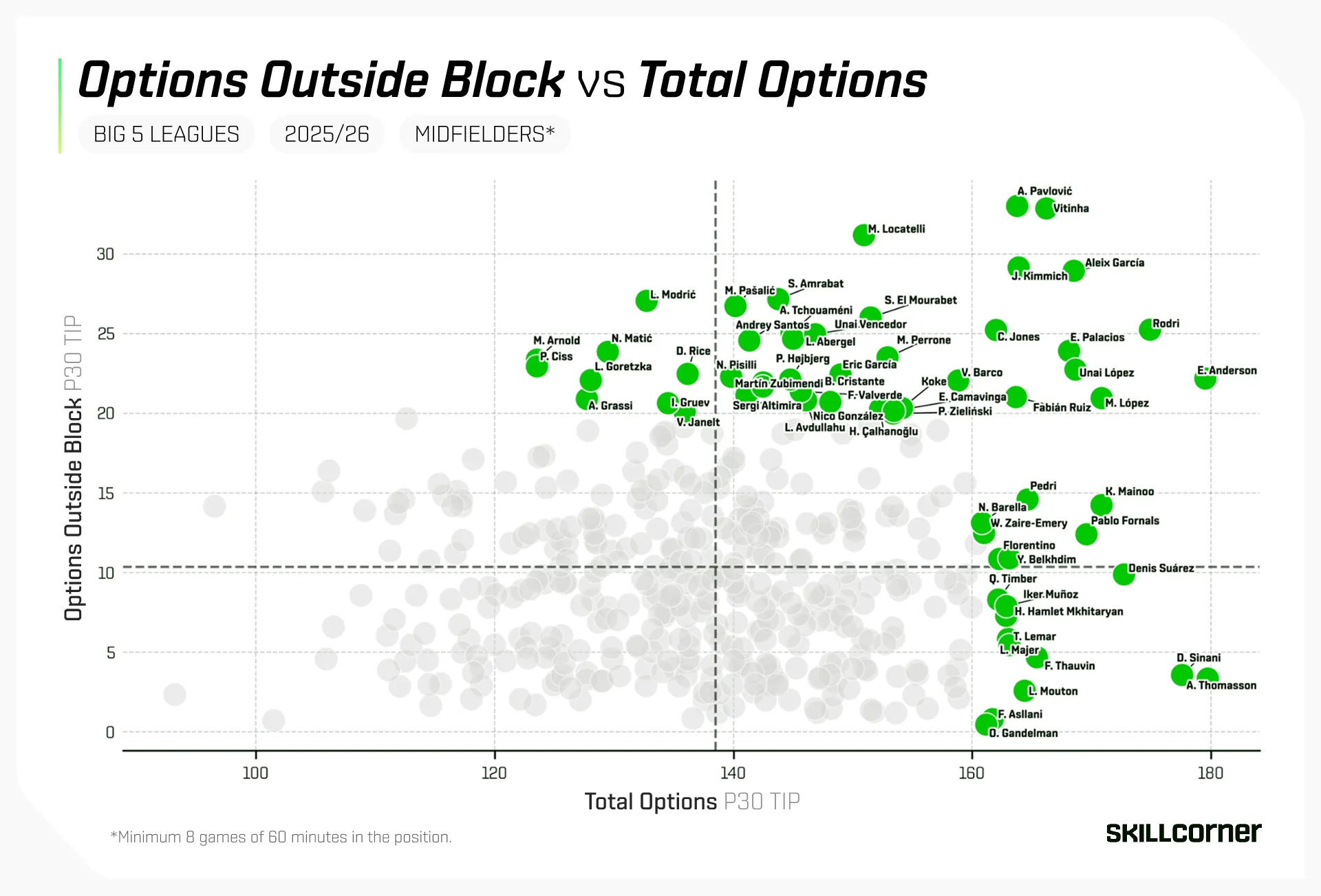
Options Outside the Defensive Block - Flags
player_position = DM, LDM, RDM, LM, RM, AM, CM
event_type = passing_option
team_in_possession_phase_type = 'create'
inside_defensive_shape_end = FALSE (option)
interplayer_direction != 'forward'
interplayer_distance_range != 'long'
In this case, we also require that the ball carrier the midfielder shows up for is outside the opposition's defensive block, leveraging Player Possessions, an additional Dynamic Event type provided by SkillCorner.
player_possession inside_defensive_shape_end = FALSE
Which Midfielders Show Up Diagonally, Inside the Opposition Block?
Diagonality is one of the hottest topics in football today. Some read it collectively: patterns where players in close or relative proximity set up diagonally to one another and to the ball carrier, enabling quick, progressive interactions.
At the individual level, it is just as decisive. Creating space against a direct marker and showing up diagonal to the ball carrier matters for one simple reason: it lets a midfielder face forward the instant the ball arrives, setting the scene for progression and threat.
When this happens inside the opposition's defensive shape, bypassing at least one opponent, it unlocks central progression: the high-reward, high-risk scenario most possession-oriented teams actively seek.
The chart below draws a clear separation. The top-left quadrant gathers the midfielders who most often show up diagonally inside the block — players who prioritise these internal, forward-facing positions over dropping deep to build. Key examples include Wirtz, Enciso, and Sancet.
.webp)
Diagonal Option Inside Block - Flags
player_position = DM, LDM, RDM, LM, RM, AM, CM
event_type = passing_option
inside_defensive_shape_start = TRUE
interplayer_angle BETWEEN 20 & 60 OR -60 & -20 ·
n_opponents_bypassed >= 1
Which Midfielders Run the Channels?
Alongside diagonality, channel runs are another defining feature of the modern game. Made at high speed and at every height of the pitch, these runs break the defensive line and sow doubt in defenders, especially when they attack the conflict zones in the central and half-spaces.
Sprinting to attack the space in behind, or to receive a ball in the central corridors, has become a key offensive weapon and one of the reasons behind the resurgence of the low-block back five at the latest World Cup.
In the top-right quadrant below, we find the players who rank highly for both Diagonal Options and high-speed Channel Runs. Midfielders who show up inside the block to play forward and attack the last defensive line feature prominently here, with Kroupi, Rogers, Sarr, Bellingham, and McKennie as notable examples.
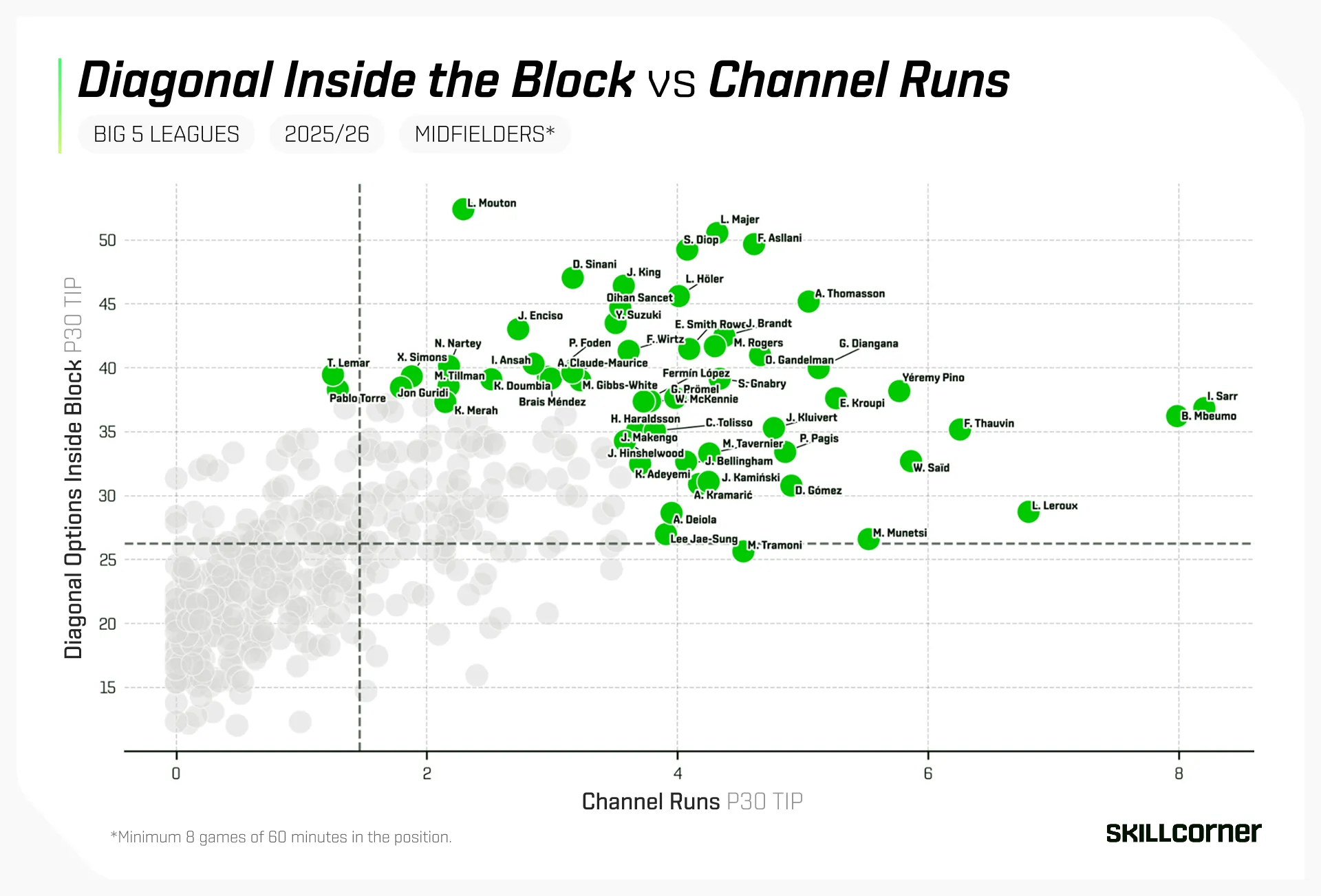
Channel Run - Flags
player_position = DM, LDM, RDM, LM, RM, AM, CM
associated_off_ball_run_subtype IN ('behind', 'cross_receiver')
channel_start IN ('center', 'half_space_left', 'half_space_right') · speed_avg >= 20
The Bigger Picture
Combining all three custom metrics together, we can see how elite midfielders set themselves apart through their positioning and off-ball choices: the deep builders, the diagonal receivers, and the runners who threaten the last line.
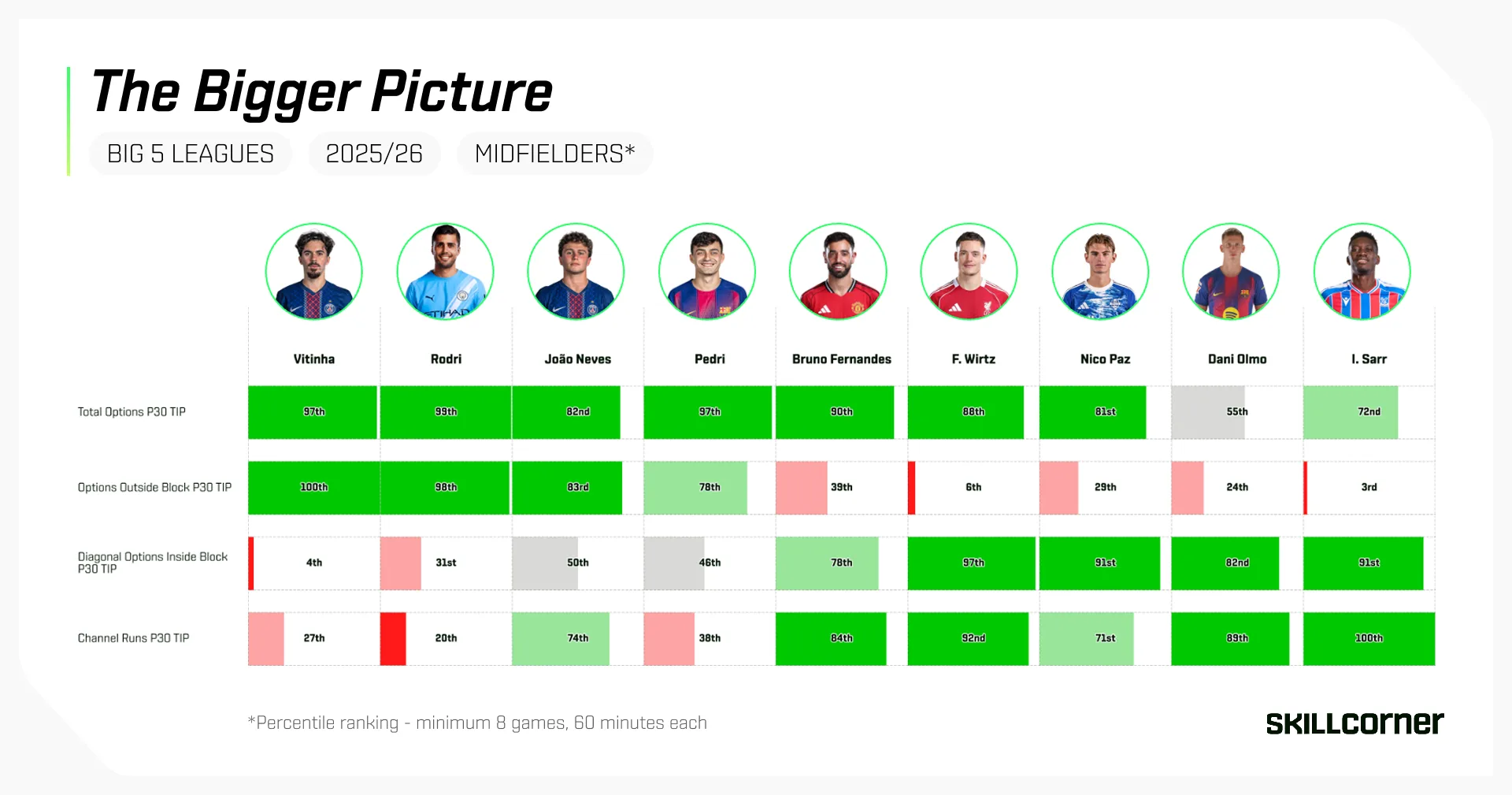
In the second part of this analysis, we'll turn from the spaces midfielders occupy to the impact they generate from them: the value they create by positioning in, or invading, those areas.
Unlock the real value of tracking data. Get in touch to learn more about Game Intelligence and our Physical Data.