

Metric Explainer: On-Ball Engagements – Recovery Press
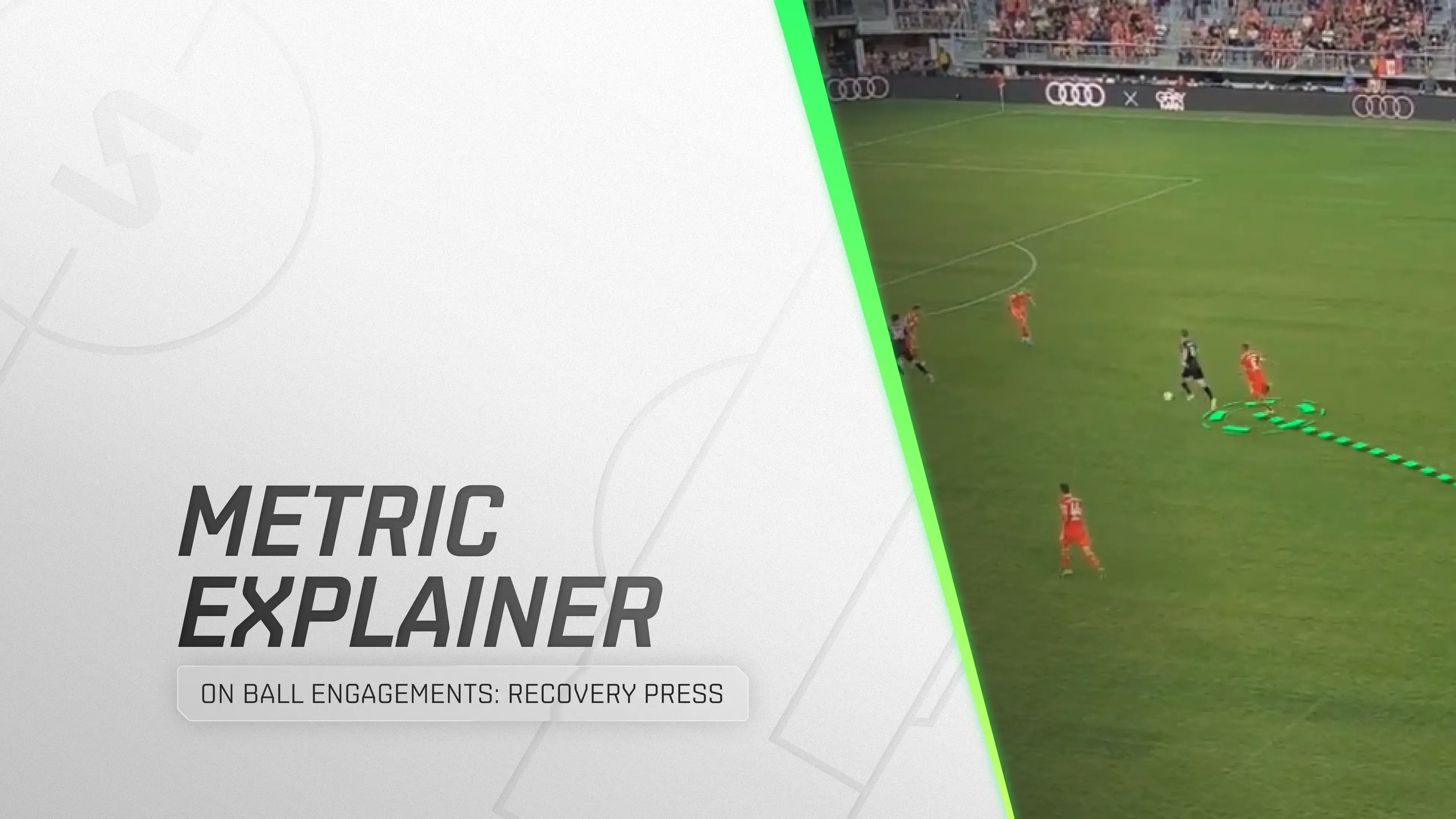
We can now identify when a player presses the ball-carrier while sprinting back into position, and how effective that action is at affecting the opposition's play.
A player's defensive behaviour captures their influence on the game out of possession: how they engage the ball-carrier, limit the space around them, and affect what the opponent does next.
Event data has only ever told part of that story, logging the finished action — the tackle, the interception — and only at the moment a defender makes contact with the ball.
On-Ball Engagements fill in the rest. Recorded whether or not the defender touches the ball, they measure both how often a player engages a ball-carrier and what that engagement achieves, giving analysts a far richer starting point.
Every engagement carries three layers of context: the type of pressure behind it — Pressing, Pressure, Recovery Press or Counter Press — the outcome it produces, and the phase of play in which it takes place.
This is the final episode of our series on On-Ball Engagements. For the full breakdown of engagement types and outcomes, start with episode 1, Pressing, then catch up on Pressure and Counter Press.
Here, we focus on Recovery Press, pressure applied while sprinting back into position, and how effective that action is at affecting the opposition's play.
Applied Use Case
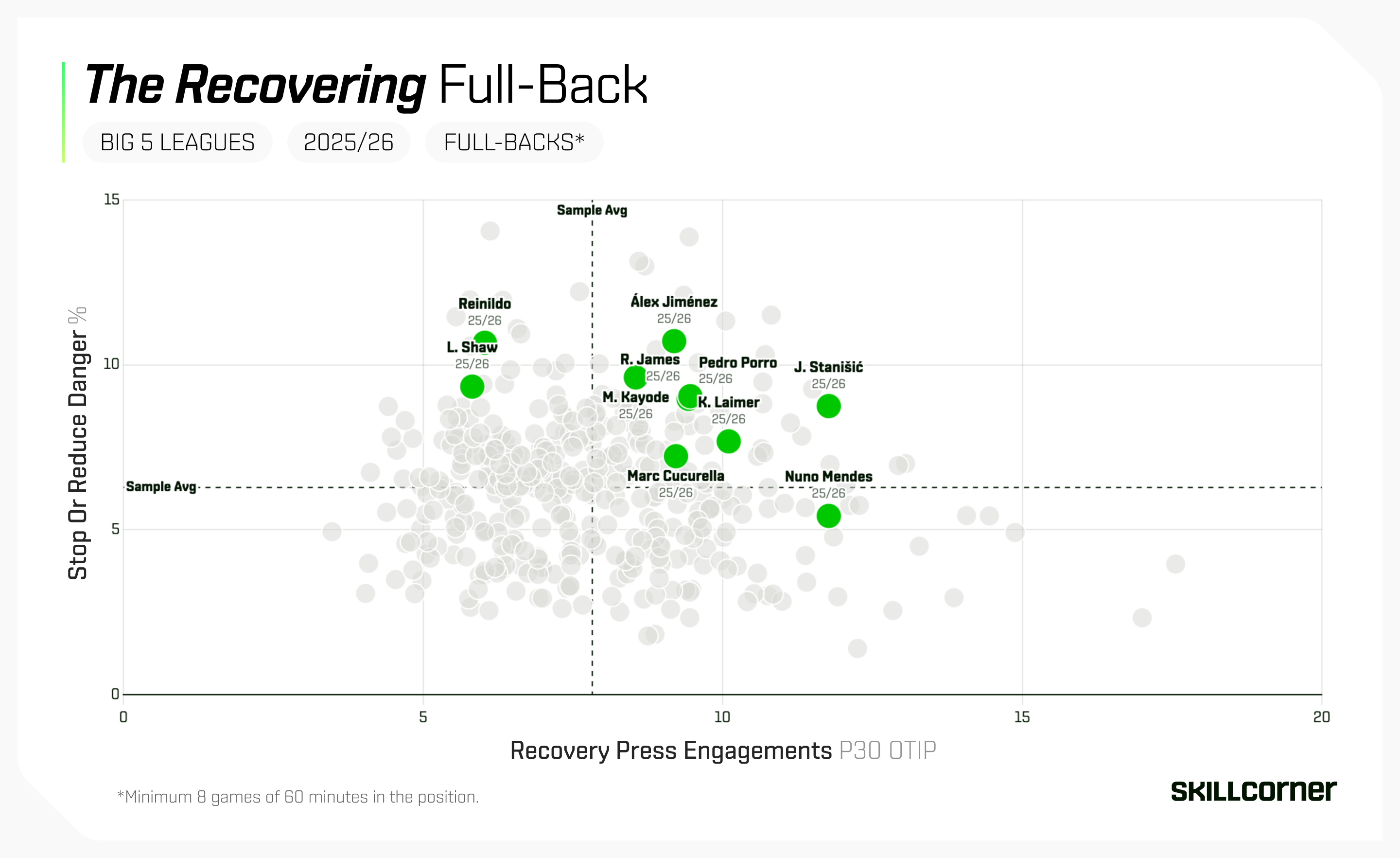
The Recovering Full-Back
Modern full-backs spend much of the game high up the pitch, while remaining a key part of their team's defensive structure. When possession is lost, the responsibility to sprint back and prevent damage often falls on them.
Plotting Recovery Press Engagements against Stop or Reduce Danger Percentage separates the full-backs who engage most often on the recovery from those whose recovery efforts successfully defuse a dangerous attack.
Metric Definition
Recovery Press Engagements is the number of times a player applies pressure to the opposition's ball-carrier while sprinting back into position after being beaten or caught out of position, measured per 30 minutes of opponent time in possession (OTIP).
Stop or Reduce Danger Percentage is the share of a player's On-Ball Engagements that either break up the attack outright or lower the danger of the opposition's possession. It is a measure of real defensive impact, not just whether the individual duel is won.

On-Ball Engagements are one of the key contextual metric groups that make up our Game Intelligence suite, combining on and off-ball insights for more precise performance and stylistic profiling. Get in touch to learn more.