


XYZ Tracking, revolutionizing the fundamentals in basketball tracking
One feed, millions of data points
The evolution of tracking data
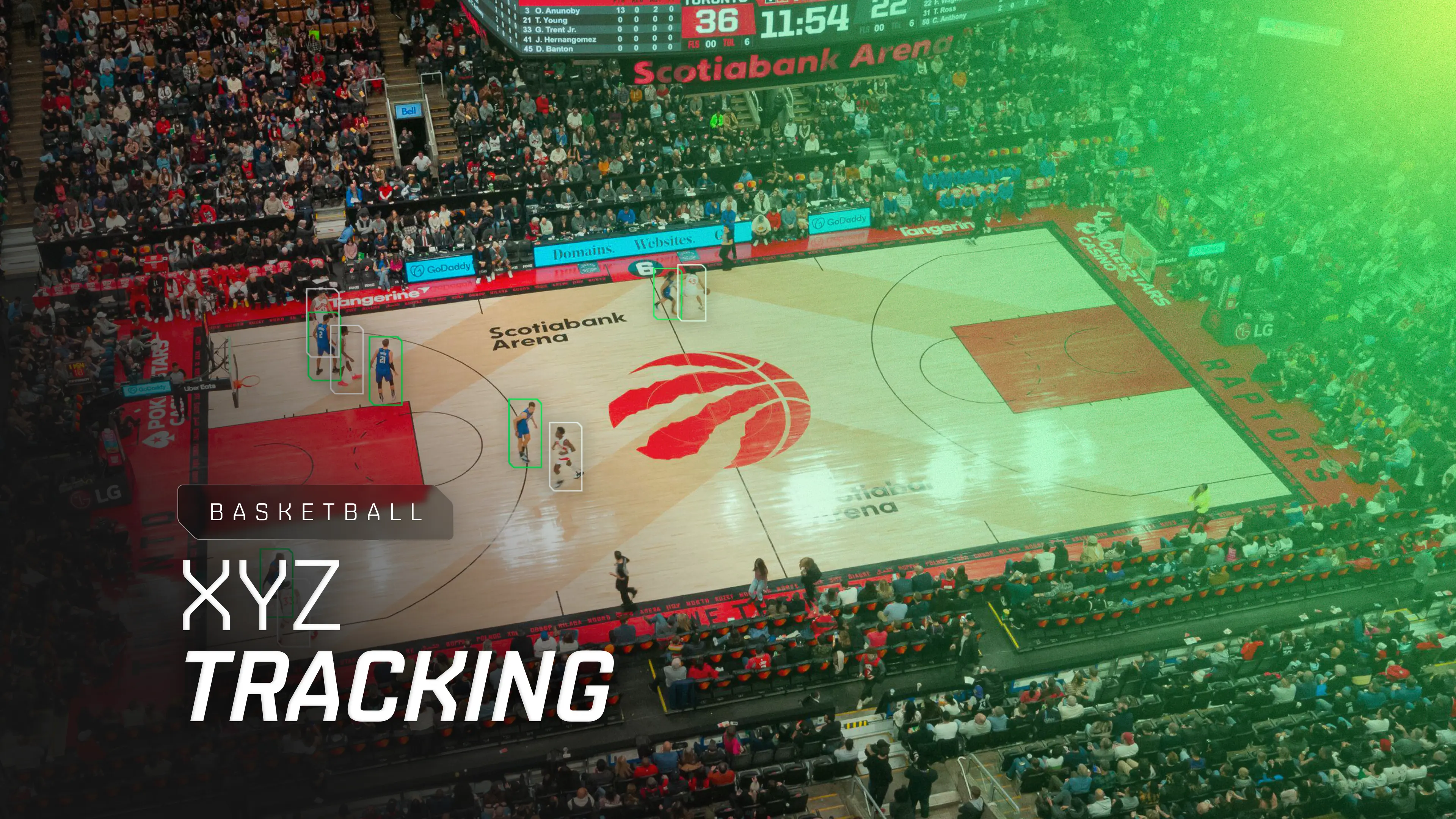
Over the past 15 years, tracking data has greatly evolved in basketball. From manual annotations to automated tracking thanks to complex camera rigs throughout stadiums, these progress have given franchises the tools to go more in depth when it comes to play-by-play insights. The progress of AI has made things evolve even faster and the data points have increased exponentially.
But this data was locked behind stadium doors. Franchises could view their players through a microscope, but when it came to scouting college or european talents, they would often operate blind.
By leveraging the recent advances in computer vision and AI, SkillCorner can now extract with a high level of precision the tracking data of every player and ball through a single broadcast feed. This ability allows for a harmonization across the entire basketball landscape. Scouts, data analysts can now monitor any player and any game from the collegiate level or international leagues the same way they would their own. It isn’t about simply democratizing data, it’s about transforming analysis and scouting altogether and handing these tools to everyone.
“Tracking data has transformed basketball analysis over the last decade in the NBA. Having tracking data for the NCAA and all major international leagues will help us make the most educated decisions regarding the NBA Draft and international free agency.”
Orlando Magic
David Bencs, Assistant General Manager
The Specs: What is and how does XYZ tracking work
To fully grasp the potential of our solution it is necessary to understand how it operates and how much further into tracking it goes.
XY coordinates: creating the digital court
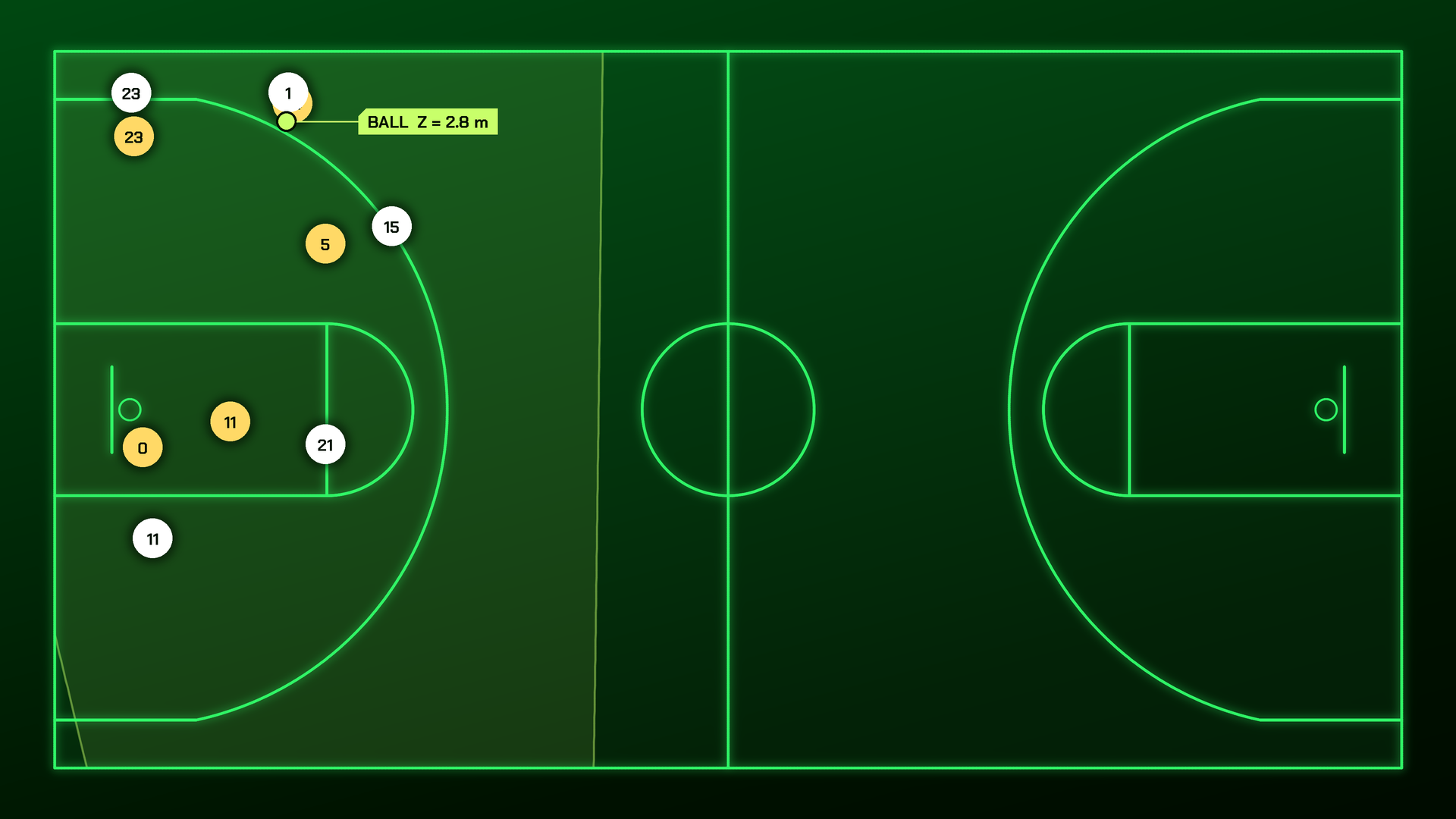
Our AI-powered technology allows for the complete recreation of the court on a 2D digital scale. The solution maps out all 10 players by capturing their XY coordinates at 25 frames per second. Through our deep learning algorithm we are able to continuously track each player on and off screen while measuring speed, physical intensity and spacing. The solution is trained to handle any form of visual obstruction or player not appearing on the feed in order to guarantee a ceaseless tracking of possessions all through one broadcast feed. Our solution is best in class at predicting players off-camera, doing so with an accuracy of 98% on all plays.
The Z axis: keeping the eye on the ball
One of the most time consuming and complex elements to tracking is the ball. Tracking ball movement isn’t just about its starting point and final destination. In order to build proper analysis and identify a basketball play you need to see and understand how the ball moved in 3D space. Not all shots are created equal, knowing how the ball traveled during a shot gives each skill or statistic more context, leading in turn to a greater insight to a player’s competency and abilities.

Physical Attributes: Getting a better understanding of athlete performances.
XY tracking not only allows for better tactical insights, it also brings in depth knowledge and consistency to a players athletic performances on the court and throughout seasons and leagues. Frame by frame tracking offers analysts the full picture of how much intensity a player puts in defensively throughout a game. Can the player consistently bring the same athleticism in the first quarter and the fourth ? Does he navigate well through off-ball screens ? In a stop-and-go sport like basketball, velocity changes and momentums are at the core of the game. Being able to measure frame by frame these changes in speed (acceleration, deceleration) and spacing automatically is the extra edge a team needs in a 82 game season where consistency will be the key to victory.
A frame by frame breakdown of SkillCorners Solution
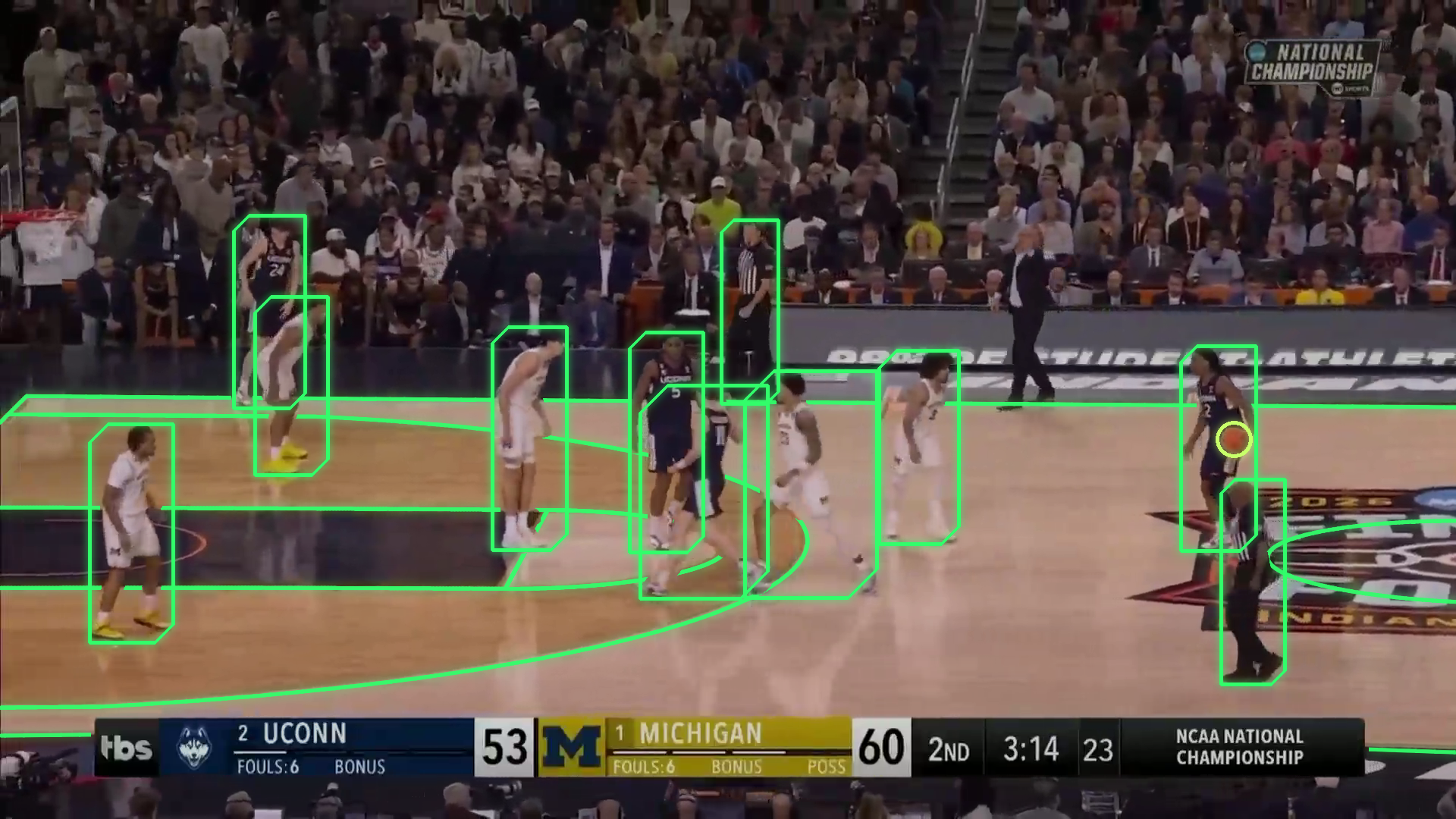
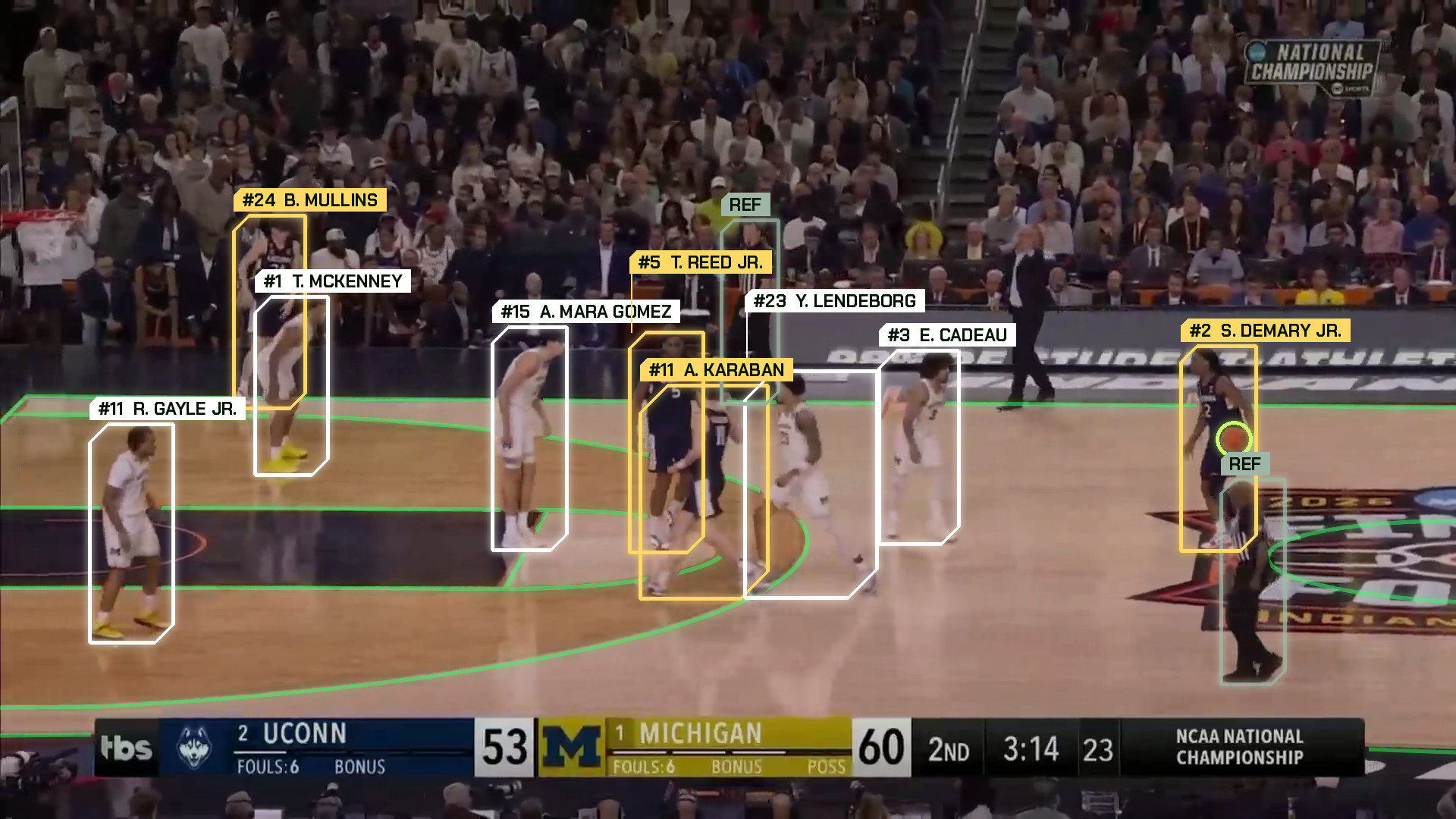
In the images below we illustrate how our solution can track players and the ball directly from a single feed. From the original frame, the SkillCorner solution can identify the lines of the court, the different actors present on the screen and where the ball is located. We are then able to identify through team colors, jersey numbers who’s who on the court. Notice only 9 players are present on screen. As mentioned previously, through computer vision and machine learning we are able to correctly predict and locate player n°23 off screen. This is illustrated on the 2D mapping which is able to place every player and the ball on the court at any given moment. All this from a single broadcast feed and applicable to any game being recorded in the world.

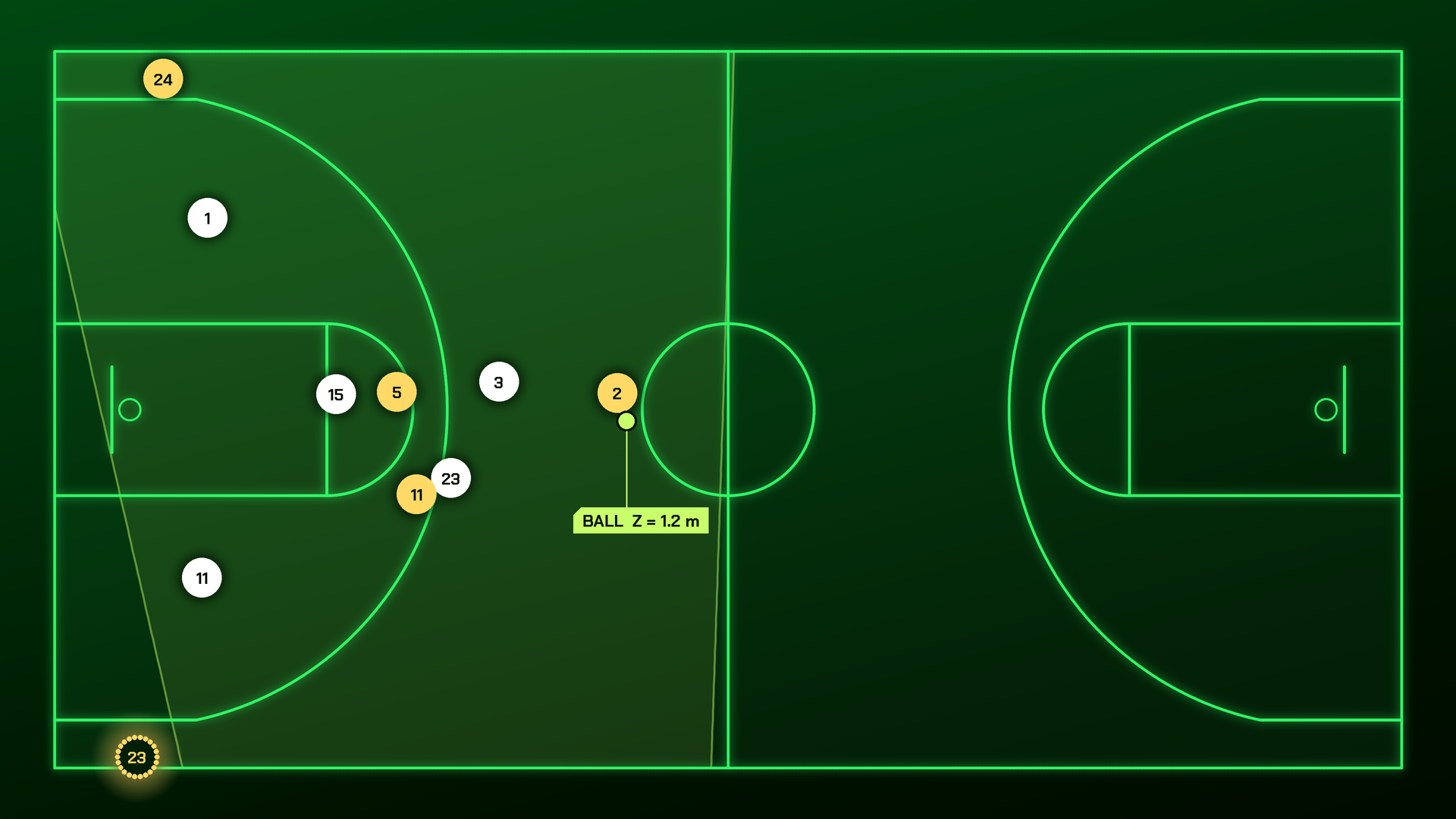
One broadcast feed, millions of data points across the world